May is one of our favourite months for a safari in Southern Africa. The summer rains have largely eased, temperatures are becoming more comfortable and the landscape often still carries the freshness of the green season. It is also before the busiest part of the safari year in many areas, which can make May an especially appealing time to travel.
In East Africa, May is still part of the long rains, although conditions often begin to improve as the month progresses. Tanzania remains particularly interesting because the Great Migration is moving through another important stage, while Rwanda and Uganda continue to offer gorilla and chimpanzee trekking for travellers who are comfortable with wetter conditions.
Where to go on safari in East Africa in May?
May is still within the main rainy period across much of East Africa. The landscapes are green, rivers and wetlands are full and birdlife is excellent. Rain can affect road conditions and some seasonal camps may close, but showers are often interspersed with clear periods rather than lasting all day.
| Country | Safari Area | Rating | Typical Temperatures | Typical Rainfall |
|---|---|---|---|---|
| Kenya | Masai Mara | LOW | 12°C to 25°C | Approx. 155 mm |
| Tanzania | Serengeti | LOW | 14°C to 26°C | Approx. 74 mm |
| Rwanda | Volcanoes National Park | LOW | 7°C to 15°C | Approx. 168 mm |
| Uganda | Bwindi Impenetrable National Park | LOW | 12°C to 22°C | Approx. 114 mm |
Tanzania
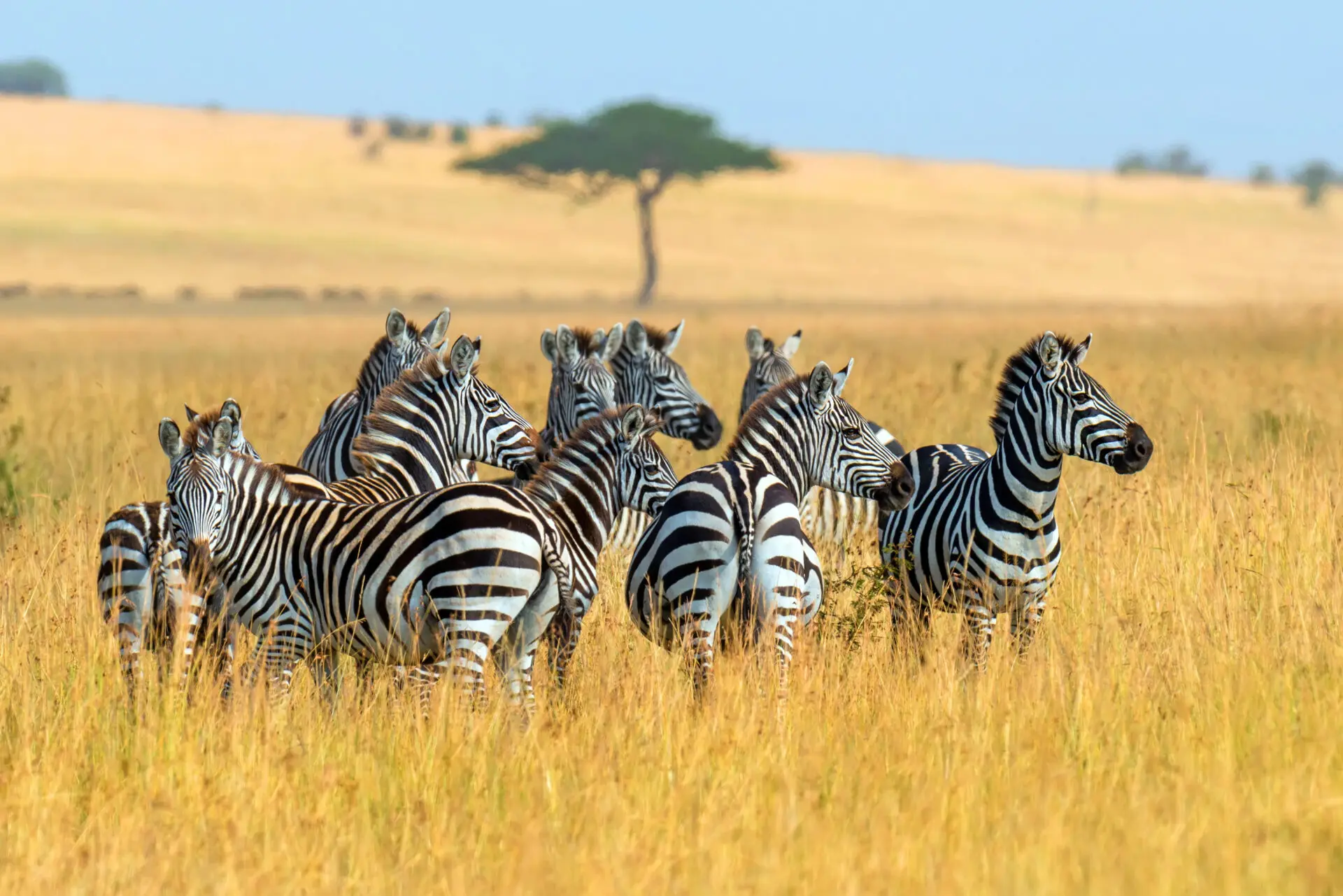
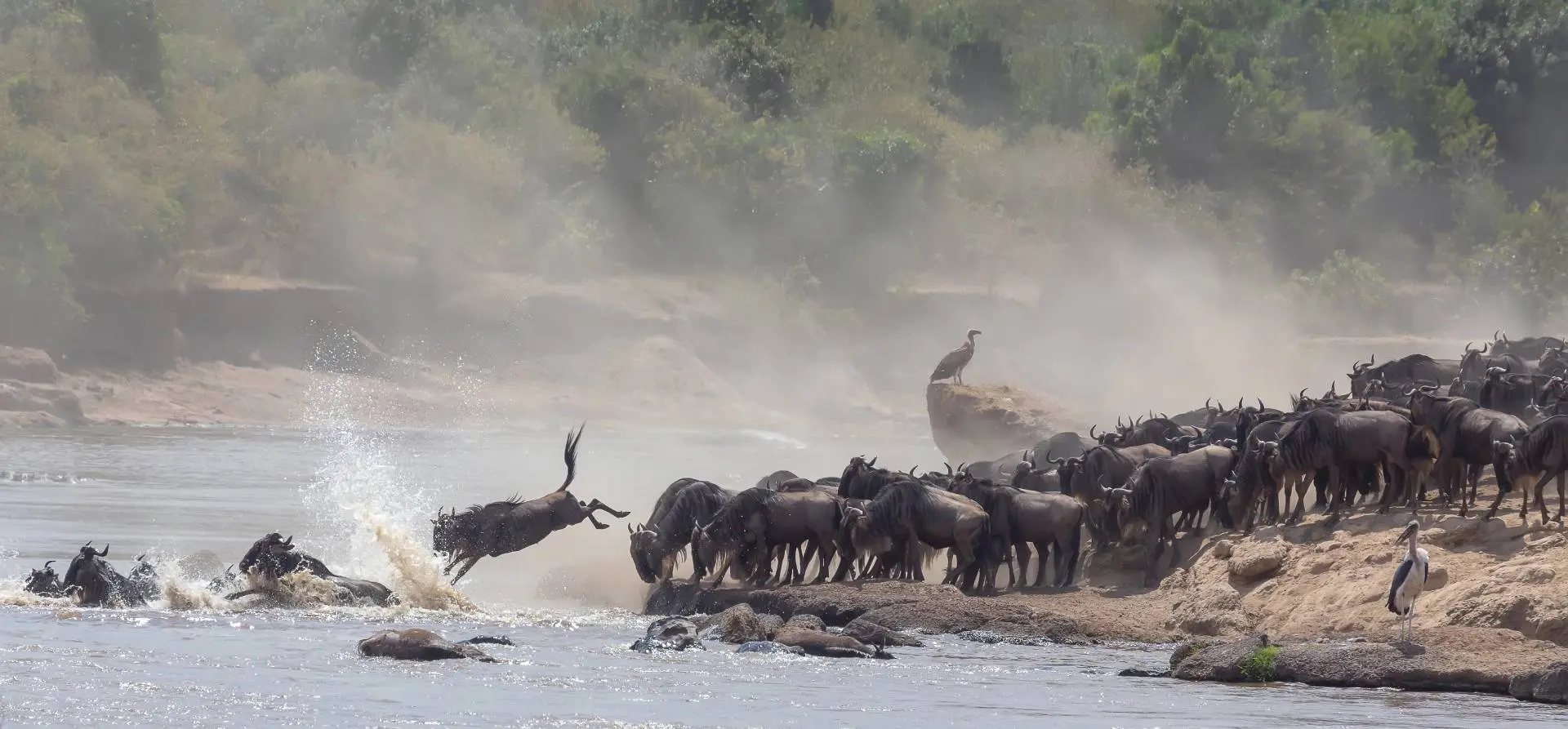
May can be a fascinating month in Tanzania, particularly for travellers following the Great Wildebeest and Zebra Migration.
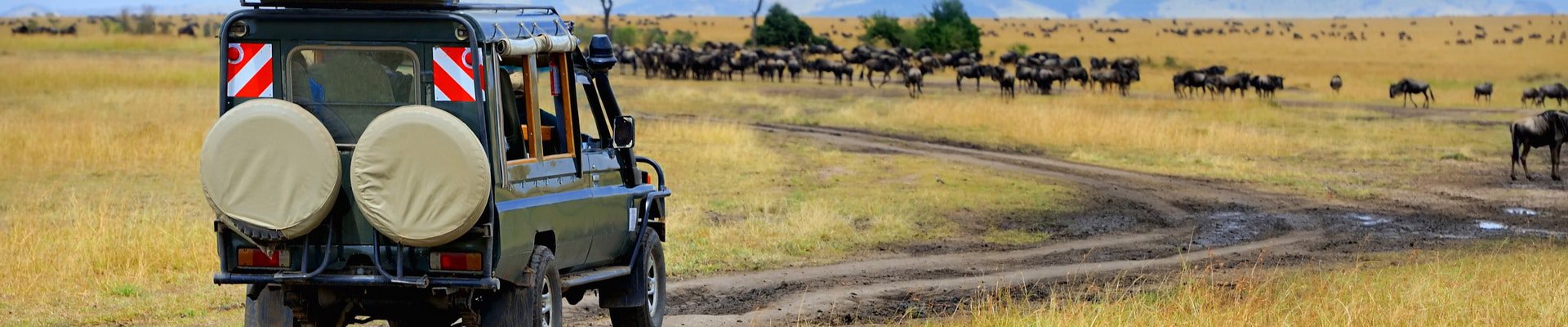
By this stage of the year, the herds are generally moving through the central and western parts of the Serengeti National Park, following fresh grazing as they continue northwards. The exact location changes from year to year because rainfall determines where the best grass is found.
May is also associated with the wildebeest rut, which adds another layer of drama to the migration. Large herds, territorial behaviour and active predators can make this a very rewarding period for wildlife viewing.
The trade off is the weather. May can still be wet, roads may be muddy and some camps reduce operations during the long rains. For travellers who are flexible and comfortable with green season conditions, the Serengeti can feel much quieter than during the peak dry season months.
Kenya
Kenya is still experiencing its long rains during May, although conditions often begin to ease later in the month.
The main Great Migration herds remain in Tanzania, but Kenya’s resident wildlife is present throughout the year. Areas such as the Masai Mara, Laikipia and Amboseli can all be rewarding, especially for travellers who value quieter safari areas and lush landscapes.
Rain can make some roads more difficult, so flying between safari areas can be useful in certain itineraries, but it is not essential in every case. Private conservancies remain appealing for their lower vehicle numbers and, depending on the conservancy, guided walks, night game drives and off road wildlife viewing.
Rwanda and Uganda
May remains one of the wetter months for gorilla and chimpanzee trekking in Rwanda and Uganda.
Trails can be muddy and slippery, but mountain gorillas can be tracked year round. Rainforest weather is unpredictable in any month, so suitable footwear, rain protection and a willingness to accept changing trail conditions are important.
Rwanda’s gorilla trekking takes place in Volcanoes National Park, while Uganda offers trekking in Bwindi Impenetrable National Park and Mgahinga Gorilla National Park. Both countries can also be combined with chimpanzee trekking and traditional wildlife safaris.
Where to go on safari in Southern Africa in May?
May is an excellent month across much of Southern Africa. The rains have largely eased, daytime temperatures are pleasant and the first cooler nights of the dry season begin to arrive.
The landscape is often still green, but vegetation gradually begins to thin and wildlife becomes easier to locate as seasonal water sources start to disappear. For many travellers, May offers an excellent balance between pleasant weather, good wildlife viewing and fewer visitors than the busiest winter months.
| Country | Safari Area | Rating | Typical Temperatures | Typical Rainfall |
|---|---|---|---|---|
| Botswana | Khwai / Okavango | GOOD | 12°C to 30°C | Approx. 2 mm |
| Madagascar | Andasibe-Mantadia | GOOD | 14°C to 25°C | Approx. 72 mm |
| Namibia | Etosha | GOOD | 10°C to 29°C | Approx. 2 mm |
| South Africa | Kruger | GOOD | 12°C to 28°C | Approx. 15 mm |
| Zambia | South Luangwa | GOOD | 15°C to 30°C | Approx. 6 mm |
| Zimbabwe | Hwange | GOOD | 9°C to 28°C | Approx. 4 mm |
Botswana
We often think of May as one of Botswana’s best kept secrets. The intense summer heat has gone, mornings are becoming crisp and the days are usually warm and sunny.
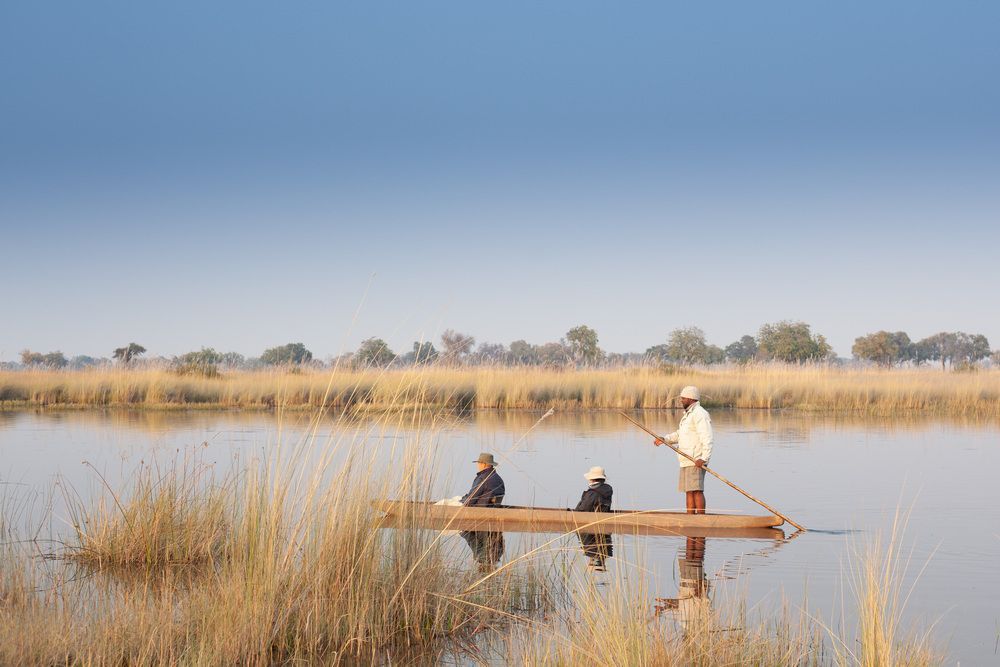
In the Okavango Delta, the annual floodwaters from Angola are moving progressively through the system. Different areas flood at different times, and the extent of the water varies from year to year, but May often marks the beginning of a beautiful transformation across many parts of the Delta.
Wildlife viewing improves as the dry season develops, while birdlife remains very good. May also falls before the busiest part of the Botswana season, which can make it an excellent time for travellers wanting strong wildlife without peak winter conditions.
Zimbabwe
May is the beginning of a very rewarding safari period in Zimbabwe. The main rains have ended, temperatures are comfortable and both Hwange and Mana Pools begin moving into their dry season rhythm.
Wildlife is still relatively spread out compared with later in the season, but conditions become progressively better as natural water sources recede. The landscapes can still be attractive and green, and visitor numbers are generally lower than during the peak months.
Victoria Falls remains spectacular in May. Water levels are still extremely high after the March and April peak, so the Falls are powerful and dramatic, although heavy spray can still limit visibility from some viewpoints.
Namibia
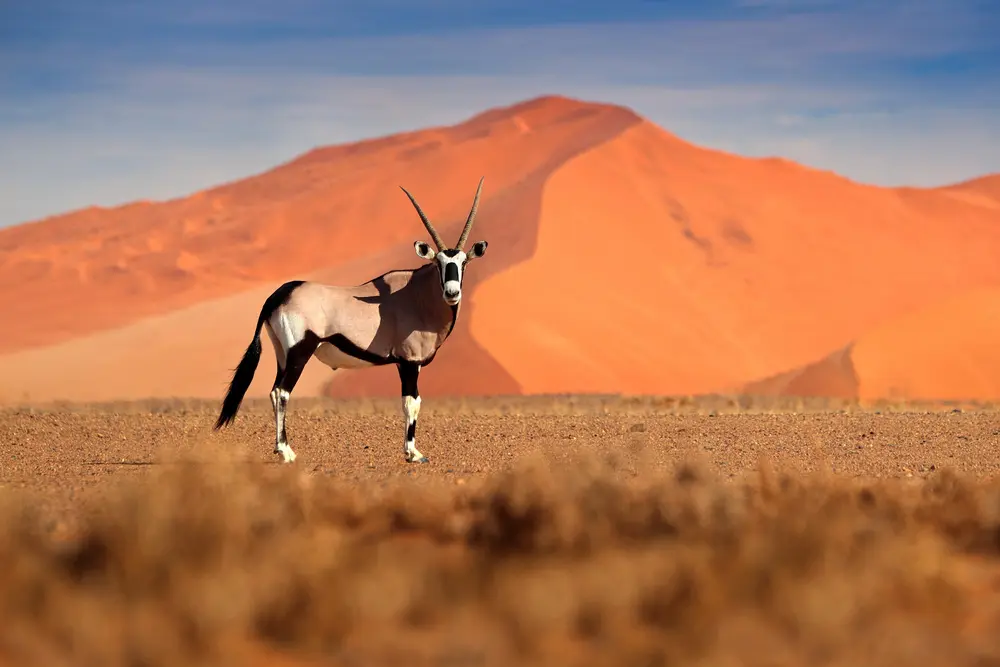
May is one of the best months to begin a Namibia safari. The dry season is settling in, rain is becoming rare and temperatures are generally very comfortable.
In Etosha National Park, wildlife becomes increasingly dependent on permanent waterholes as seasonal water begins to disappear. Game viewing therefore improves through the month.
May also works well for a wider Namibia circuit combining Sossusvlei, Swakopmund, Damaraland and Etosha. The country is drier and easier to travel through, while the much colder winter mornings of June and July have not yet fully arrived.
Zambia
May marks the beginning of Zambia’s main safari season. The rains have largely finished, roads begin to dry and more camps reopen as access improves.
In South Luangwa National Park, the landscape can still be beautifully green and the Luangwa River remains high. Wildlife is not yet as concentrated as it will be later in the dry season, but May offers a quieter safari with pleasant temperatures and very good birdlife.
Not every remote bush camp will necessarily be open at the beginning of the month, so the exact choice of accommodation matters when planning a May itinerary.
South Africa
May is an excellent safari month in South Africa, especially around Kruger National Park and the surrounding private reserves.
The summer rains have largely ended, humidity is lower and vegetation begins to thin. Mornings and evenings are cooler, while daytime temperatures are usually very pleasant for game drives.
Cape Town and the Western Cape are moving towards their winter rainfall season, so conditions can be more changeable. A combination of Cape Town and safari can still work very well, but travellers should expect a greater chance of cooler or wetter weather in the Cape than in the northeast.
Madagascar
May is a very good month to visit Madagascar. The main wet season has ended, road conditions are improving and most national parks are accessible.
Temperatures are generally comfortable and the landscape often retains some of its green season colour. This makes May a good time for travellers interested in lemurs, forests, national parks and overland touring.
Because conditions are drier than earlier in the year, it becomes easier to combine several different regions and habitats within one itinerary.
So, where is best for an African safari in May?
May is especially strong for Southern Africa, but there are also worthwhile East African options for travellers who understand the seasonal trade offs.
- For the Great Migration: Tanzania
- For the Okavango Delta and pleasant early dry season conditions: Botswana
- For the start of the main safari season: Zambia and Zimbabwe
- For Etosha and a Namibia circuit: Namibia
- For Kruger combined with Cape Town: South Africa
- For lemurs, national parks and improving road conditions: Madagascar
- For gorilla trekking: Rwanda and Uganda, if you are comfortable with wetter conditions
May offers an excellent combination of pleasant weather, improving wildlife viewing and lower visitor numbers in many Southern African destinations. It is one of those months where travelling just before peak season can work particularly well.
If you are thinking about travelling to Africa in May, we can help you compare the different destinations and choose the areas that best suit your interests, travel style and budget. You are welcome to book a phone or Zoom conversation with us to start exploring the possibilities.